PROJECT Dr. Abdennaji ADIB
Genetic or acquired diseases such as cancer
or aids remain major problems and challenges of this century. The use of classical
pharmacological means has not allowed to cure these diseases, hence the current
turn towards gene therapy. Gene therapy consists in introducing a suicide
gene (in the case for instance of cancer and aids) or a healthy gene (in the
case of mucoviscidosis or of myopathies) into a defective cell.
The gene alone cannot enter into the cell, it has to be combined with a transfer
vector thus to be able to express the protein needed by the ill cell. Two
types of gene transfer vectors exist :
1) Viruses are frequently used vectors
in gene therapy because of their natural efficiency to infect cells and to
transfer their genome into the nucleus (the therapeutic gene is inserted in
place of the viral genome, replacing the genes responsible for viral infection
in the organism), but they pose the problems of the size of the insert, oncogenicity
and immunity (cf Figure 1).
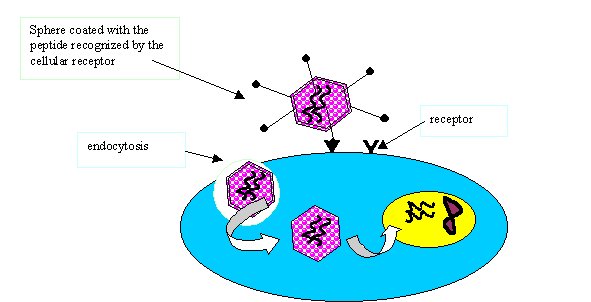
Figure 1 : Infectious cycle of viral vectors. The virus infects the host cell taking the endocytosis way mediated by a receptor.
2) For these reasons, chemists have developed chemical vectors of gene transfer, sort of synthetic "viruses". Even though the transfection efficiency is lower than the one of natural viruses, these synthetic vectors (such as cationic polymers) present considerable advantages : they are not immunogenic, no risk of infection, and they may insert a therapeutic gene of quasi illimited size (whereas in the virus, the maximal size of the insert is 30 kb). They remain however very toxic and often not biocompatible, what limits their use in vivo. Moreover, their low transfer efficiency is likely due to an aleatory compaction of the genes and a heterogeneous size of the vector/gene complex (cf Figure 2).
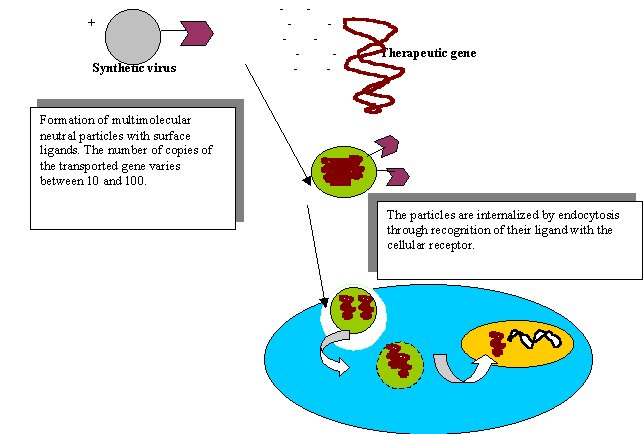
Figure 2 : Schematic representation of the different gene transfer steps by synthetic vectors.
With this project I propose to try to conceive new gene transfer synthetic vectors (cationic polymers of controled structure and molecular mass), biocompatible and biodegradable and which would have a level of transfection comparable to the one of a virus. These polymers would present at once a surface exclusively destined to compact the therapeutic gene and an anchor point for the fixation of a very specific ligand (viral peptide, lectines, antibodies) thus allowing to only target tumoral cells.
A range of these vectors will then be proposed to biologists and doctors.
This project will consist of three parts :
a- design and synthesis of non viral vectors,
b- biophysical studies of the vector/gene complex,
c- study of the efficiency of gene transfer in different cellular types.
This work sounds very ambitious, but it opens blue horizons for an efficient
cancer and aids therapy.